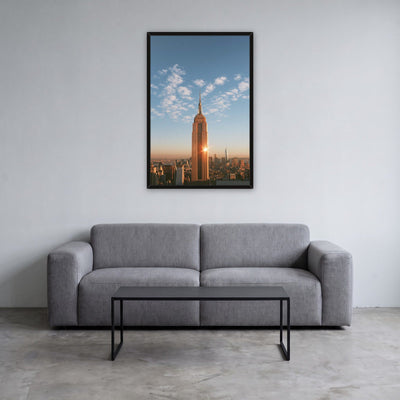
What size art goes above a sofa (and how high to hang it)
The wall above the sofa is the biggest blank in most living rooms, and the easiest one to get wrong. One rule sets the size, one number sets the height, and the rest is choosing between one piece, two or three.
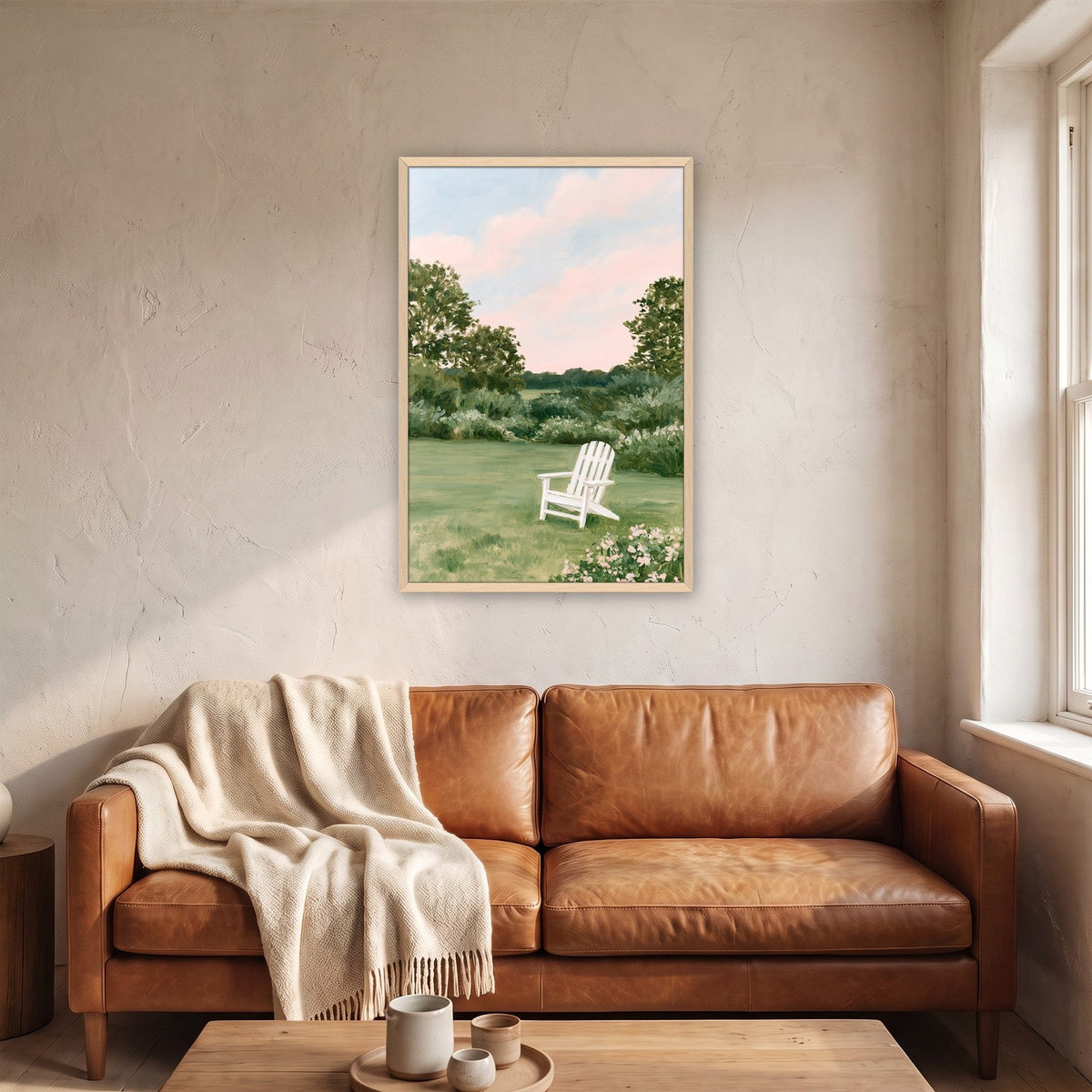
Most living rooms have one wall that does the heavy lifting, and it is usually the one behind the sofa. It is long, it faces the door, and every guest sees it. It is also where most people hang something too small, too high, or both. This guide gives you the rule for width, the number for height, a size chart for common sofa widths, and the layouts that work when one piece is not enough.
The two-thirds rule
Art above a sofa should be about two thirds of the sofa's width. Measure the sofa from arm to arm, multiply by 0.66, and that is the width your art, or your group of art, should come close to. It does not have to be exact. Anywhere between about 55 and 75 percent looks deliberate. Below half, the piece looks lost; above about 80 percent, it starts to crowd the arms.
The rule works because it gives the sofa and the art the same centre line and a shared shape. Your eye reads them as one object, a sofa with its picture, instead of two things that happen to be on the same wall.
The width that counts is the outside of the frame, not the print. A frame adds a little under two inches to each dimension, so a framed 24×36 is a touch under 26 inches wide. When you measure for a pair or a trio, include the gaps between the pieces too.
What size art for your sofa
Here is the rule worked out for the common sofa widths, using the 2:3 sizes most art prints come in. Width is measured arm to arm.
| Sofa | Width | Two thirds | What works |
|---|---|---|---|
| Loveseat | 60 in | 40 in | One 24×36, or two 16×24 |
| Apartment sofa | 72 in | 48 in | One 30×45, or two 16×24, or three 12×18 |
| Three-seat sofa | 84 in | 56 in | Two 24×36, or one 30×45 with two 12×18 either side |
| Long sofa | 90–96 in | 60–64 in | Two 24×36 with a wider gap, or three 16×24 |
| Sectional, long side | 110 in + | 72 in + | Three 24×36, or a gallery wall about 70 in wide |
Two things the chart does not show. First, a portrait piece is narrower than it feels: a 24×36 is the standard poster size, but only two feet of it is width. That is why a single portrait piece suits a loveseat and a pair suits a three-seater. Second, a landscape piece covers far more sofa: the same 24×36 turned sideways is three feet wide. If you love one particular image and your sofa is long, ask whether it reads well in landscape before you buy it in portrait. For the full list of standard sizes and their proportions, see poster sizes explained.
How high to hang art above a couch
Leave 8 to 10 inches between the top of the sofa back and the bottom of the frame. That is close enough for the two to read as one arrangement and far enough that heads leaning back do not knock the frame.
The general gallery rule, centre of the art at 57 to 60 inches from the floor, is for walls with nothing in front of them. Above a sofa, the furniture wins: hang from the sofa up, not from the ceiling down. In practice the two rules often agree. A typical sofa back is 32 to 36 inches tall; add 9 inches and a 24×36 frame, and the centre of the art lands at about 60 inches.
The common mistake is hanging too high. Art pushed up toward the ceiling floats away from the sofa and makes the room feel taller in an awkward, unfinished way. If you are not sure, hang it lower than you think, then live with it for a day.
- Low modern sofa (back under 30 in): you can go up to 12 inches above it so the art is not too low for people standing.
- Tall sofa or a sofa with a high back cushion: stay at 8 inches, or the top of the art may get close to the ceiling on an 8 foot wall.
- Sofa against a window wall or under a shelf: the gap still applies, but check the total height first and size down if the top of the frame would be within about 8 inches of the ceiling or sill.
One piece, a pair, or a trio
All three layouts follow the same width rule; the difference is the mood.
- One large piece is the calmest choice. It suits a minimal room, a strong single image, and a sofa up to about 72 inches. At 30×45, an unframed print or a framed canvas is easier to handle than a large framed paper print, and canvas needs no glazing, so there is no glare from a window opposite.
- A pair is the easiest way to fill an 84 inch three-seater. Use the same size and the same frame, hang them at the same height, and keep the gap between 2 and 4 inches. Pairs work best when the two pieces share something: a palette, a subject, a direction of light.
- A trio stretches further and suits long sofas and sectionals. Three 16×24 prints with 3 inch gaps make a row about 60 inches wide. Keep the gaps identical; a row of three exposes uneven spacing more than any other layout.
Whichever you choose, treat the outside edge of the group as the edge of one big picture. The centre of the group lines up with the centre of the sofa, not with the centre of the wall, if the two are different.
Gallery walls above a sofa
A gallery wall is the answer when the sofa is very long, when you already own pieces of different sizes, or when you want the wall to change over time. Plan the outer shape first: a rectangle about two thirds the sofa's width and roughly half as tall, with its bottom edge 8 to 10 inches above the sofa back. Then fill it from the middle out, largest piece first, keeping every gap the same, usually 2 to 3 inches.
Tape paper templates to the wall before you put any nails in. It takes twenty minutes and saves a wall full of holes. Mixed sizes look most intentional when they share a frame color, or when they share a proportion: 8×12, 12×18 and 16×24 are all 2:3, so they line up along their edges without odd gaps.
Frames and finish above a sofa
Above a sofa, art is seen from across the room and from below, so finish matters more than you might think.
- Frame color: pick it against the wall, not the art. Black frames give definition on white and pale walls; natural oak warms a cool room and sits easily with wood furniture; white frames almost disappear on a white wall, which suits busy images.
- Glare: if a window faces the sofa wall, a framed canvas avoids reflections entirely. A framed print behind acrylic reflects less than glass but still shows a bright window at some angles.
- Weight and fixing: a large framed piece above people's heads should hang from two points, not one. Use two hooks or two screws into wall anchors, set level, so it cannot swing or slip.
A quick checklist
- Measure the sofa arm to arm and multiply by 0.66. That is your target width for the art or the group.
- Choose one piece, a pair or a trio that adds up to that width, including frames and 2 to 4 inch gaps.
- Centre it on the sofa, not the wall.
- Hang the bottom edge 8 to 10 inches above the sofa back.
- Step back to the doorway. If it looks small from there, go a size up.
Browse living room wall art for pieces composed for this wall, or go straight to large wall art if your sofa is on the long side.
Shop the guide
The collections this guide points to.